GEORGIA TECH · B.S. MECHANICAL ENGINEERING · '27

Jackson
Murphy

Mechanical engineer at Georgia Tech. I design propulsion hardware for rocket landers and keep semiconductor fab equipment running.

GPA3.76
Internships2
TeamGT Propulsive Landers
StatusSeeking Summer 2027
Projects05
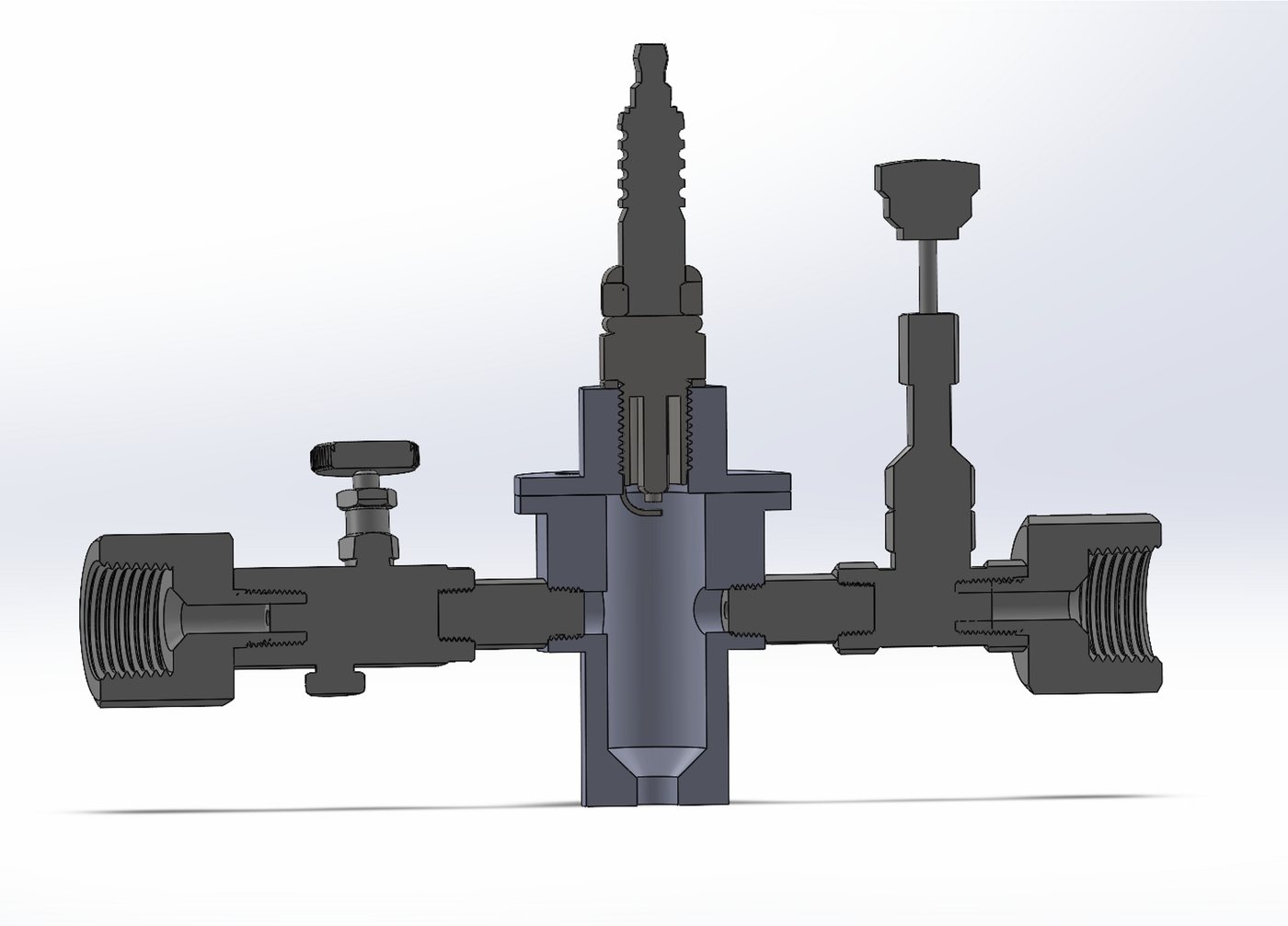
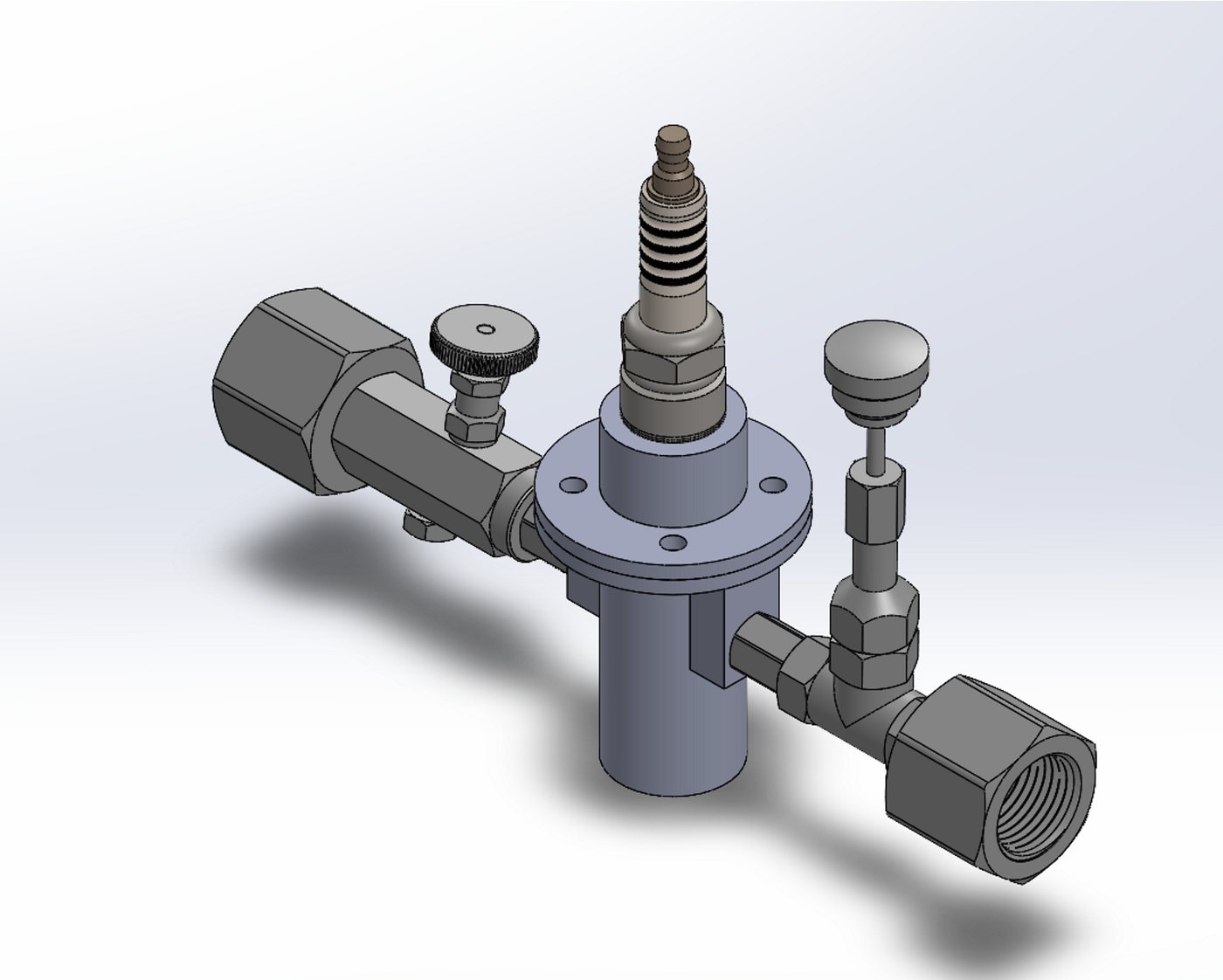
CAD render of the torch igniter assembly
GT Propulsive Landers · 2025–now

Restartable torch igniter

Pyrotechnic igniters fire once, but the Monarch lander's 1000 N engine needs to be able to restart. Our team designed a nitrous/propane torch igniter, a small rocket engine whose only job is to light a bigger one. I ran NASA CEA to set the operating point and sized the chamber from a reference engine's L*, keeping it narrow enough to machine from a single piece. I also sized the needle valves with a choked-flow analysis from 20 to 30 °C and laid out the firing sequence: nitrous, then propane, then a 20 kV spark.
NASA CEACompressible flowSolidWorks
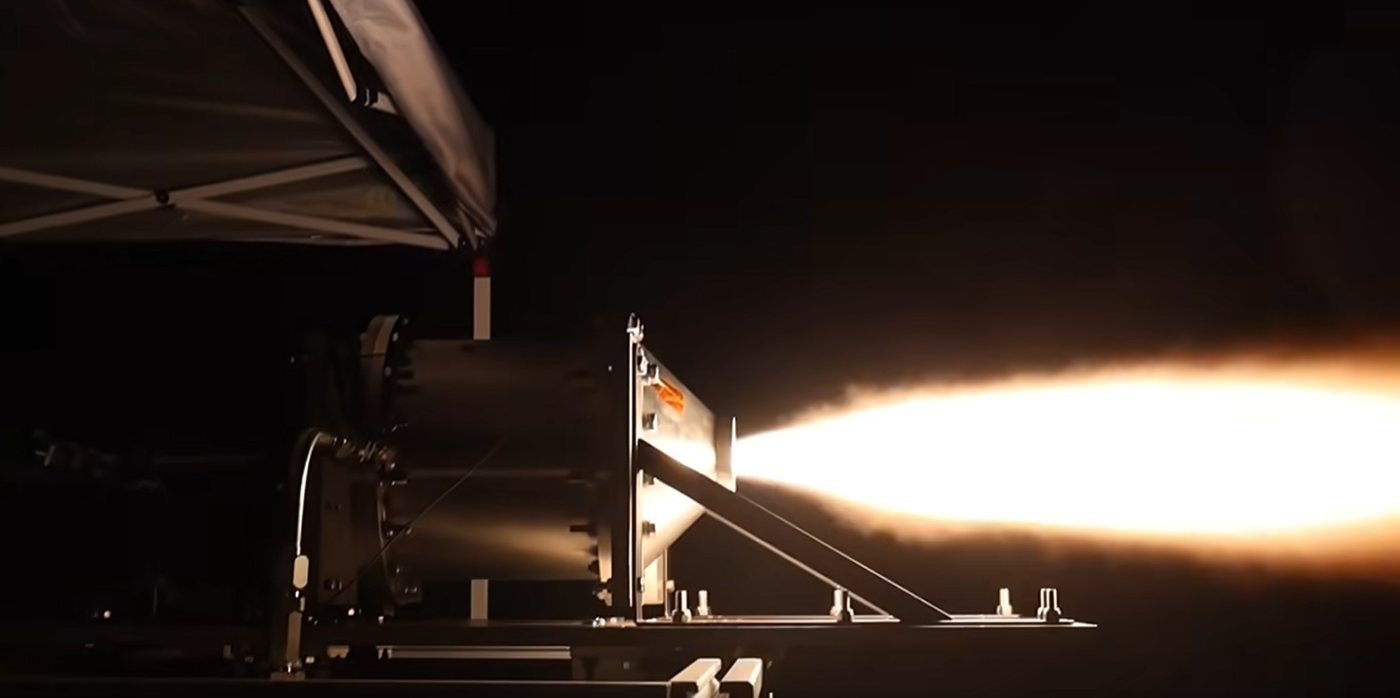
Liquid rocket engine static fire on a test stand at night
GT Propulsive Landers · In progress

Hotfire instrumentation panel

Static fires of a liquid rocket engine need pressure sensors, valves and data acquisition mounted close to the engine and held steady while it runs. We're designing the metal frame that carries this instrumentation panel and mounts it to a trailer, so the whole test setup can roll out to the test site as one unit. The frame has to handle engine vibration and road transport while keeping lines and sensors easy to reach between runs.

StructuresTest hardwareFluid systems
TSMC · Summer 2026

Vibration monitoring for CVD robots

In a CVD tool, a factory interface robot moves wafers between the load ports and the process chambers. A bearing failure in one of these robots had previously caused an estimated $18M in scrapped wafers. As an equipment engineering intern, I managed the installation of vibration sensors on these robots across 11 tools in CVD Module 1. That meant coordinating with internal departments and outside vendors to place the sensors, run Ethernet and power the SPC gateways, so early bearing wear gets flagged before it costs product.

Fab equipmentSPCVendor coordination
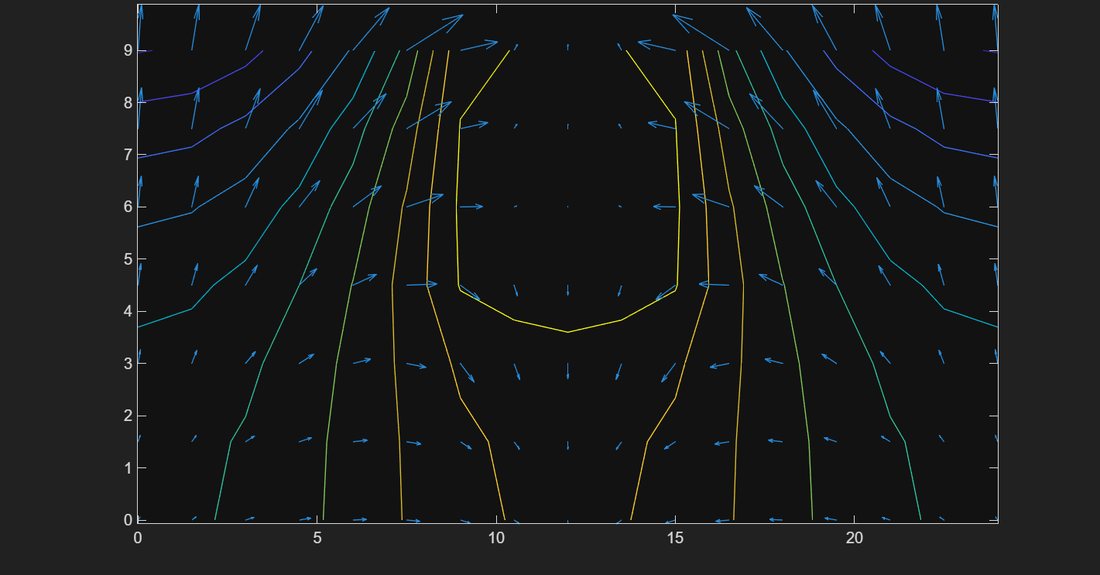
Isotherm and heat flux plot from the chip thermal model
ME 3345 Heat Transfer · Fall 2025

Chip thermal analysis

I modeled a microchip generating 35 MW/m³ inside a dielectric substrate, cooled only by air blowing across the top. I laid out a 63-node finite difference mesh by hand and wrote an energy balance for every node type, including the tricky chip/substrate interface. Solving the system in MATLAB put the peak temperature at 500.85 K, at the bottom center of the chip. A heat-in versus heat-out check agreed within 6.5%, with the gap traced to the coarse mesh.

MATLABFinite differenceHeat transfer
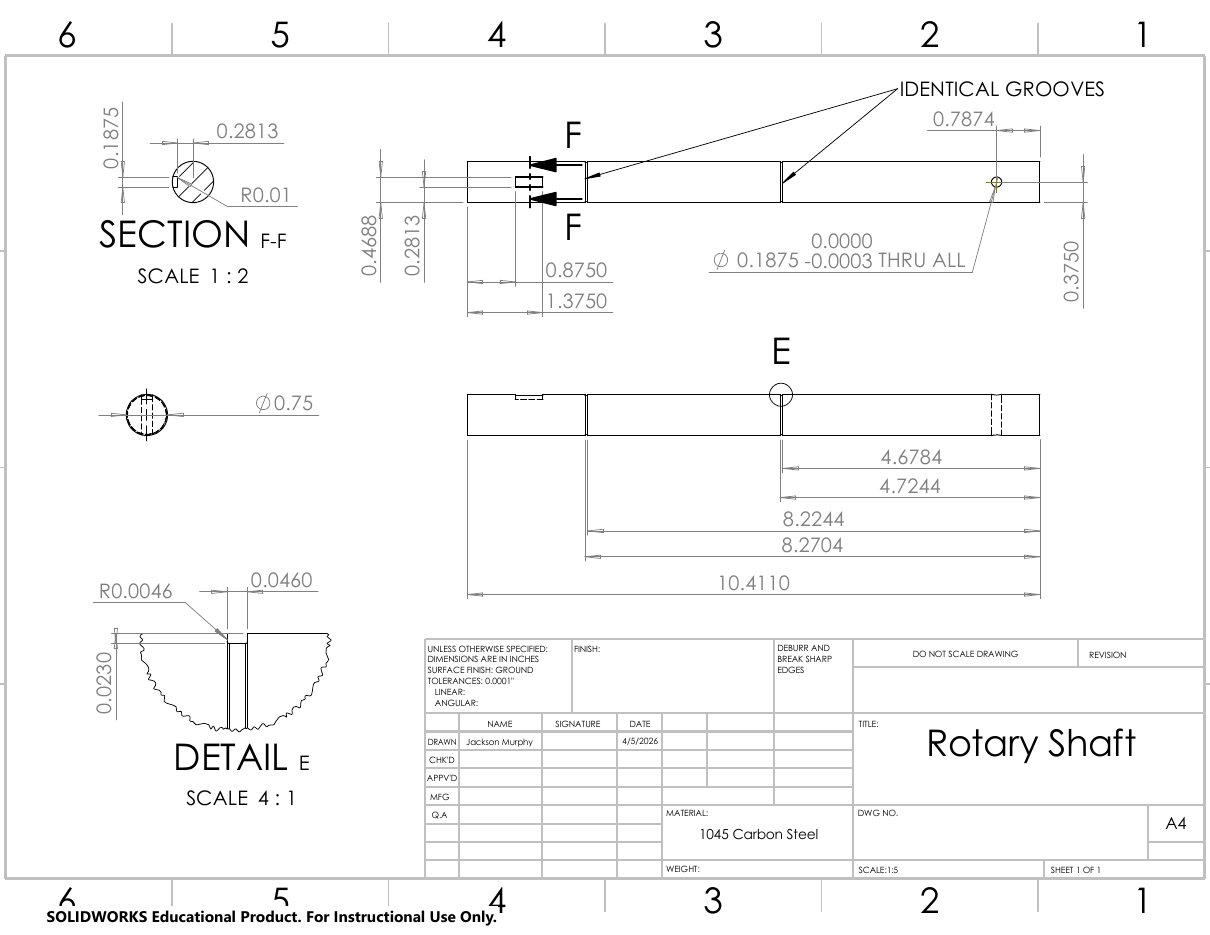
Engineering drawing of the rotary shaft
ME 3180 Machine Design · Spring 2026

Fan drive: strut, shaft & gears

Across three design problems, I took a belt-driven fan from airflow requirements to off-the-shelf parts. I sized a support strut that deflects 0.20 mm against a 2 mm limit. Then I designed a ¾ in 1045 steel shaft for infinite life, along with its key, set screw, pin and retaining rings. Finally, I chose a 28/60-tooth gear pair and bearings rated for 20,000 hours, checking the gears against AGMA bending and contact stress.

Fatigue designAGMASolidWorks
Experience
2026

TSMC

Equipment Engineering Intern · CVD

Rolled out vibration monitoring on factory interface robots across 11 CVD tools.

Fab equipmentSPCSensors
2025–now

GT Propulsive Landers

Propulsion team

Torch igniter, LOX chilldown and hotfire test hardware for 1000 N landers.

NASA CEASolidWorksCryogenics
2025

Pond & Company

Mechanical Engineering Intern

Mechanical design and load calculations for 10+ building projects.

RevitTRACE 3D Plus
2024–25

GT Crane Safety Research

Research Assistant

Redesigned and prototyped a motor housing for a robotic scale-model crane.

CADPrototyping
About

I'm a mechanical engineering student at Georgia Tech, graduating May 2027. I like work that goes from hand calcs to CAD to hardware, especially in propulsion and thermal-fluids.

Tools

SolidWorks, Inventor, Fusion, MATLAB, Python, NASA CEA, Revit

Shop

3D printing, laser cutting, waterjet, soldering, basic welding

Languages

English, Spanish (intermediate), Mandarin (beginner)

● Currently building: hotfire instrumentation panel